Weapons (Overview)
Last updated: 2026-06-15Pre-launch / subject to change at July 29, 2026 launch.
Weapons (Overview)
- System
- Weapons
- Category
- Combat
- Archetypes
- Rifles, Bows, Mist-melee
- Rarity ladder
- Uncommon → Legendary
Full weapon stat tables arrive post-launch. This is a systems-level overview of how weapons work in Mistfall Hunter — not a sortable database or a per-weapon stat list.
Weapons in Mistfall Hunter aren’t just damage numbers; they set your tempo. The arsenal spans a few broad families, each with its own scale, wind-up time, and crit multiplier — so picking a weapon is as much about rhythm as raw power. Your class and chosen archetype also steer which weapons you wield, since each class includes two archetypes with different weapons.
Weapon Archetypes
The arsenal spans three broad families:
- Precision rifles — long-range firepower built around aim. They reward the game’s “precision aiming” system: line up the shot, make it count.
- Arc-shot bows — ranged weapons with arcing projectiles. The Black Arrow class leans on bows to stagger enemies and keep distance, picking targets off from safety.
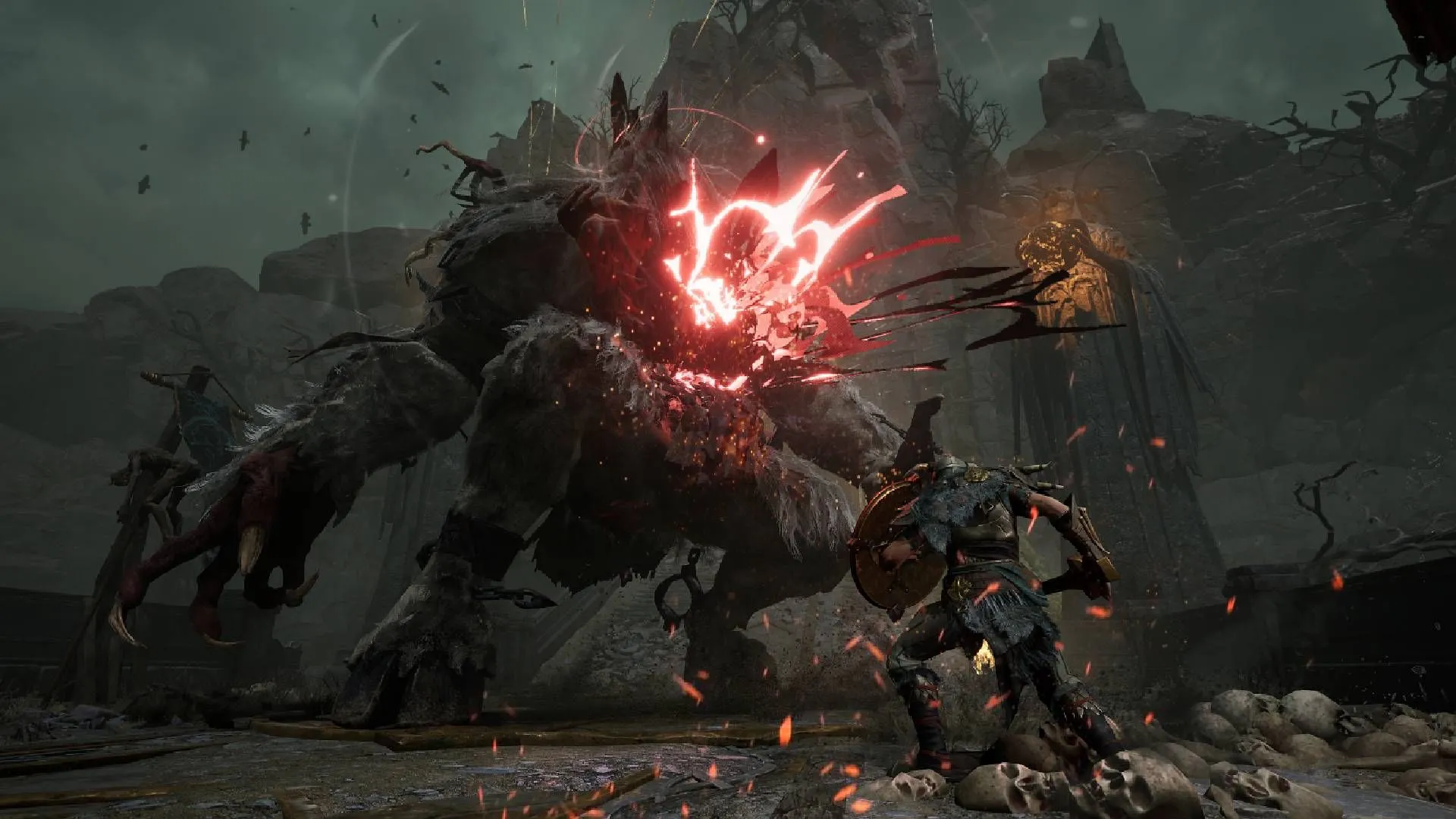
- Mist-infused close-quarters weapons — the melee backbone, from sword-and-shield and crushing hammers to greatswords and battleaxes. This is the soulslike heart of combat, where stamina, blocks, and timing decide the exchange.
Each family carries its own scale, wind-up time, and crit multiplier, which is what makes them feel distinct beyond their range. A heavy melee weapon and a precision rifle don’t just hit differently — they ask for completely different timing.
Two-Weapon Swap
Mistfall Hunter is built around carrying and swapping between weapons rather than committing to one tool. The clearest example is the Mercenary, who swaps between a sword-and-shield setup and a crushing hammer — defense and chokepoint-holding in one slot, raw crushing pressure in the other. Swapping lets you cover more situations: a ranged option for distance, a melee option for when fights close in. Your two archetypes also feed this, since each comes with its own weapons.
Wind-up & Crit Tempo
This is the load-bearing idea: picking a weapon is as much about tempo as raw damage. Every weapon has a wind-up time (how long its swing or shot takes to commit) and a crit multiplier (how hard it spikes on a clean hit).
- Slow, heavy weapons — bigger wind-up, bigger payoff. Great when you can read the opening, punishing when you whiff.
- Fast weapons — quicker commitment, smaller individual hits, more forgiving in a scramble.
Because melee runs on the stamina system, wind-up and tempo tie directly into resource management: a slow weapon that misses doesn’t just deal no damage, it can leave you gassed and glowing purple. Choosing a weapon is really choosing the rhythm you want to fight at.
Rarity Ladder (Uncommon → Legendary)
Weapons follow the same rarity ladder as the rest of your gear, climbing from Uncommon (Green) up to Legendary (Orange) — the top tier, available for all classes. Higher rarity means more affix slots and stronger bonuses (Uncommon carries 1–2 affixes; Legendary carries 4–5), so a top-tier weapon isn’t just a bigger number — it’s several passives stacked on your main hand.
You don’t only find weapons, either. The Spirit Blacksmith’s forging system at The Camp can unlock rare accessories and weapons, paid for with Gyldenblod and rare materials — a crafting path toward the gear you want rather than waiting on drops.
Tips
- Pick for tempo, not just damage. A high-damage weapon you can’t land because its wind-up is too slow for your playstyle is worse than a faster one you hit consistently.
- Use the swap. Carry complementary options — typically something for range and something for melee — so no fight catches you with the wrong tool.
- Chase Legendary for the affix slots. Like all gear, top-rarity weapons bring 4–5 affixes; pair them with talents and gear that reinforce the same build.
- Forge toward goals. If a drop won’t come, the Spirit Blacksmith can forge rare weapons for Gyldenblod and materials.